News · Creative Code
“Nobody has abolished dramaturgy — only the tool is changing”: Pavel Peregudov at the “Screen of the Future” session at Lakhta Center
· Saint Petersburg, Lakhta Center
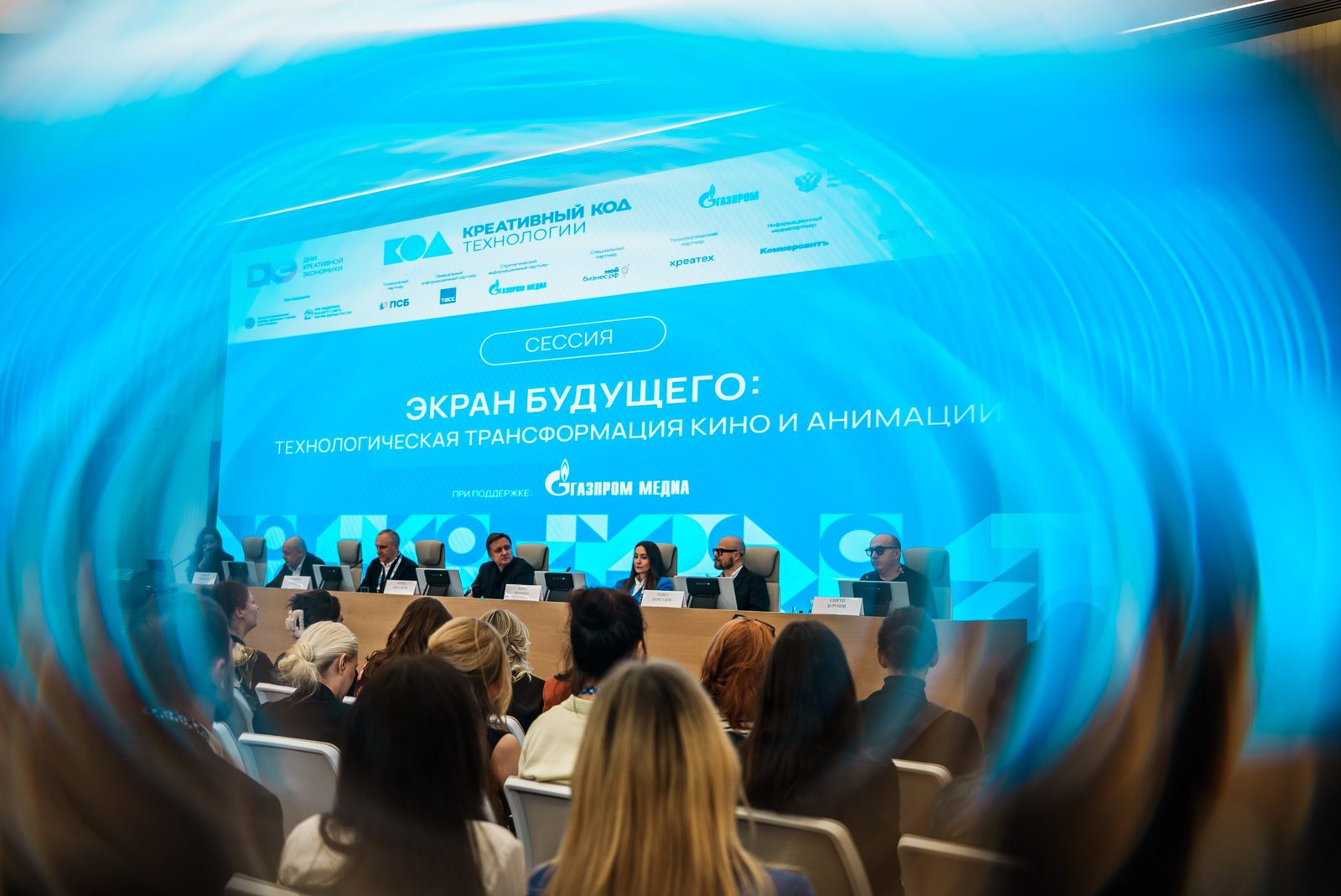
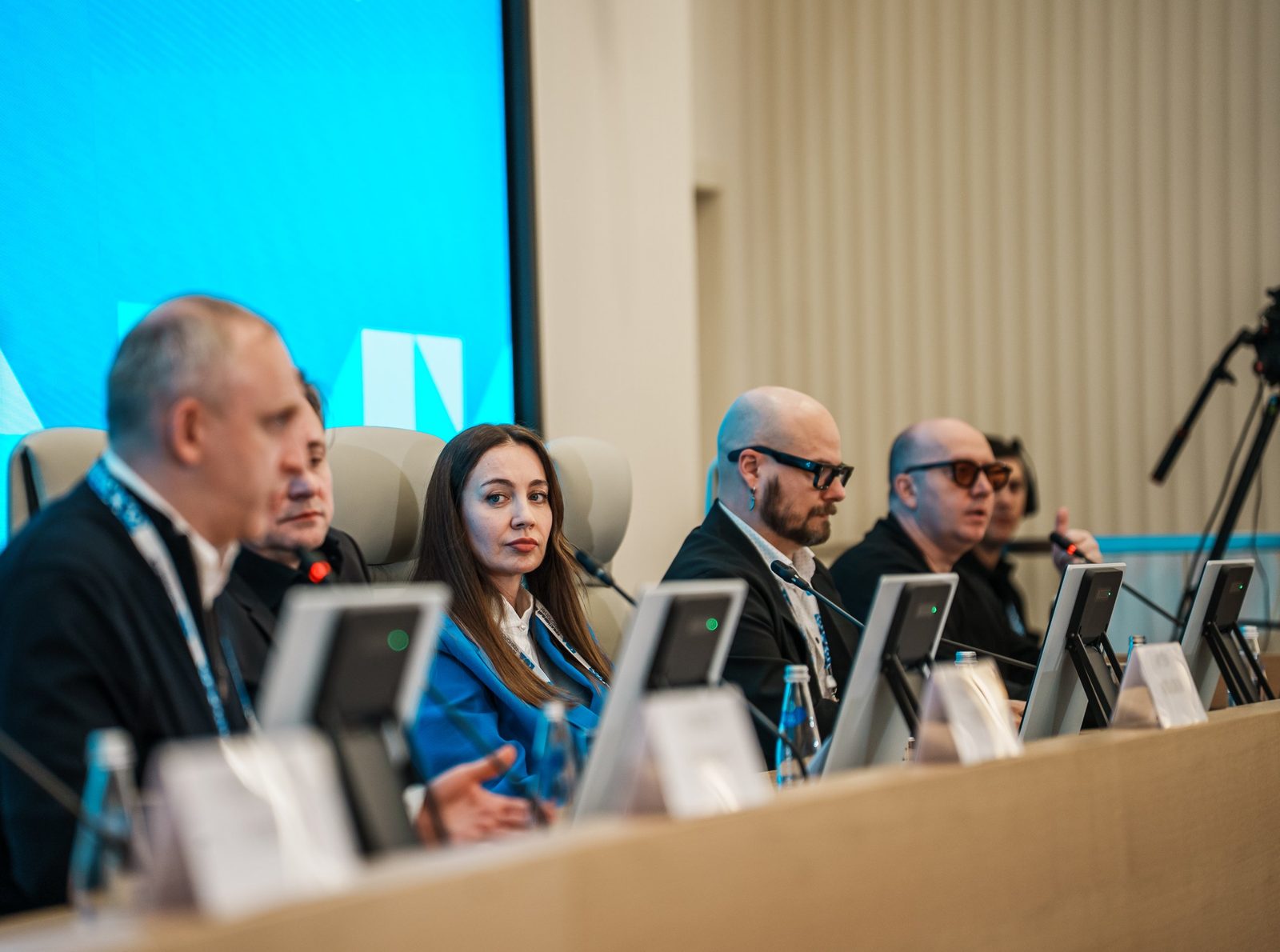
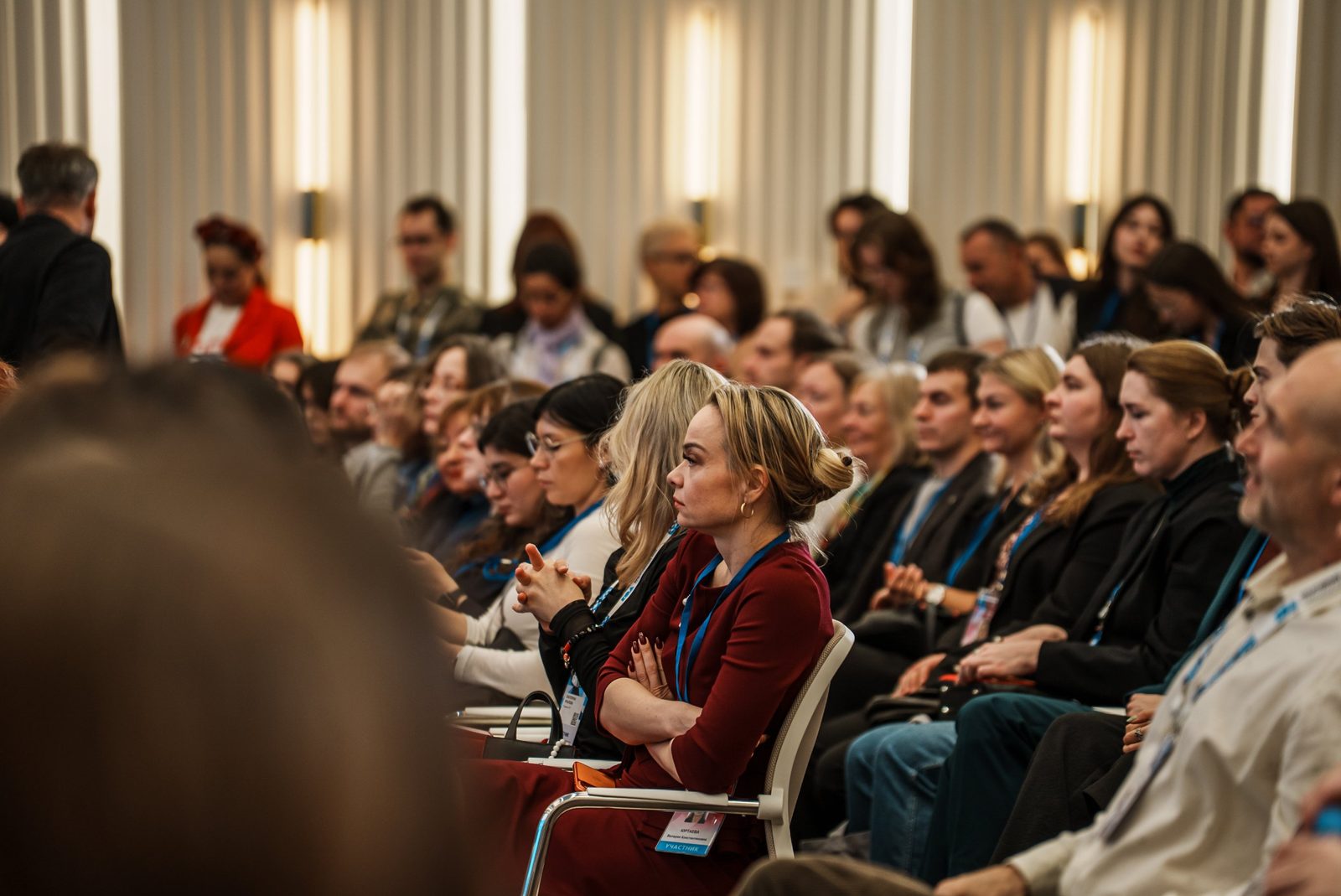
On 28 October, Lakhta Center in Saint Petersburg hosted the session “Screen of the Future: the technological transformation of film and animation”. It was part of the “Creative Code. Technologies” track of the Creative Economy Days. The organisers were Gazprom and the Russian Ministry of Economic Development, with support from Gazprom-Media Holding.
The session was hosted by:
- Angelika Kiryan, deputy CEO of the Komsomolskaya Pravda media group;
- Sergey Burunov, actor.
Taking part in the discussion:
- Artyom Mikhalkov, general producer of 1-2-3 Production;
- Yulia Nemchina, CEO of Riki Group;
- Gavriil Gordeev, general producer of Okko and a member of the Government Council for the Development of National Cinema;
- Alexei German Jr., film director;
- Pavel Peregudov, media producer and founder of MyFilm48.
The participants discussed how new technologies are changing production as a whole, not just the image.
Control stays with the human
The first question to Pavel Peregudov was about Russia's technological base and his patent for an intelligent camera control system. He is now preparing an international application.
“Control and predictability of the result are on the human side,” Peregudov said. “To get a predictable result more precisely, you can build original technological solutions that work on top of widely recognised models. Such a solution can be invented and patented in any country, there are no borders here. American and Chinese models are stronger, but Russia has plenty of smart and talented people who can ride this horse and tune it so that Russian works become better and more controllable.”
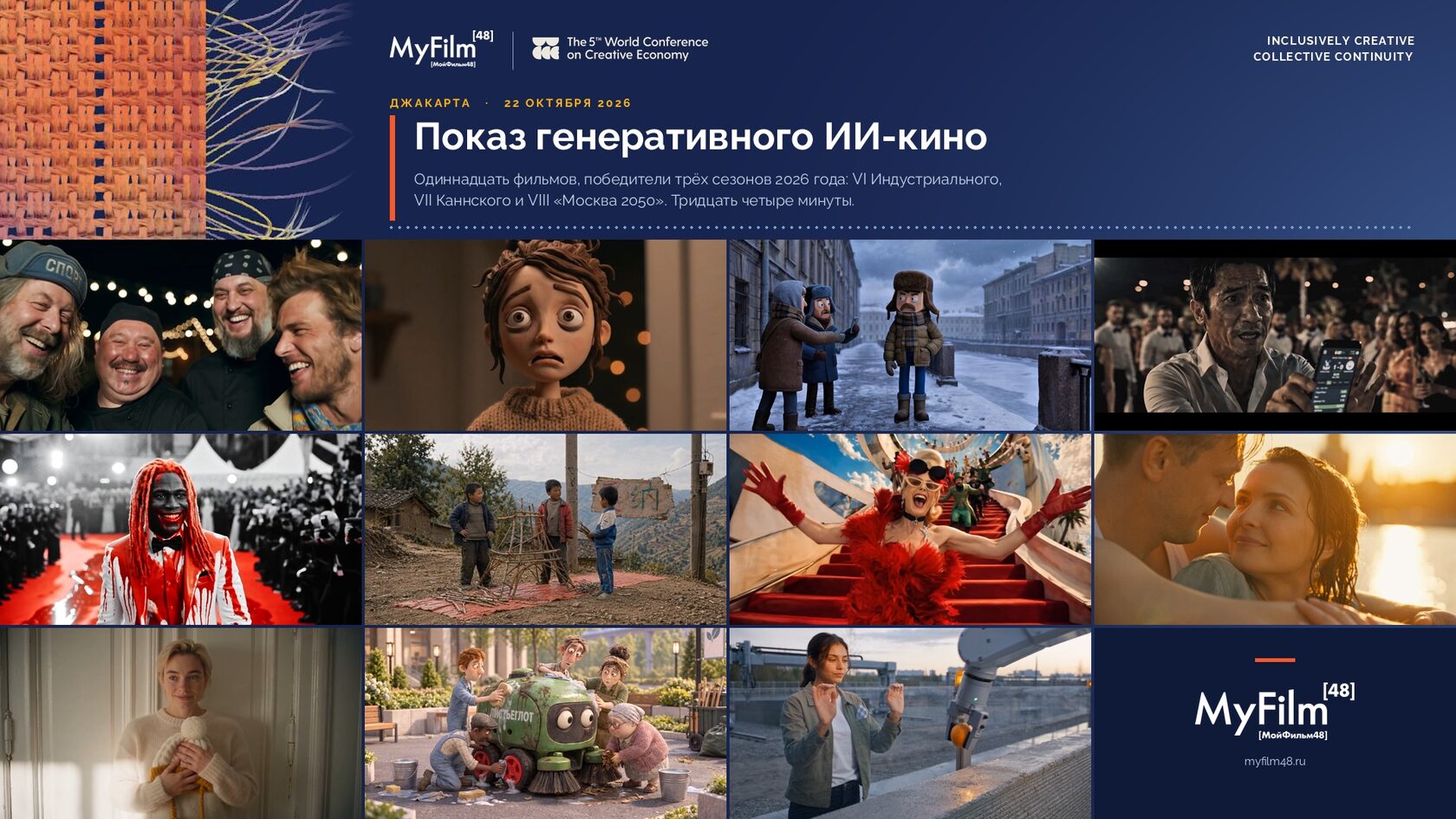
Peregudov had recently returned from Jakarta, from the World Conference on Creative Economy. A Russian delegation spoke there for the first time and showed works by MyFilm48 winners. “International colleagues honestly admit that our authors are among the best engineer-creators,” he noted. “It is a task that is not only creative but, in a sense, also an engineering one.”
Eight seasons of MyFilm48
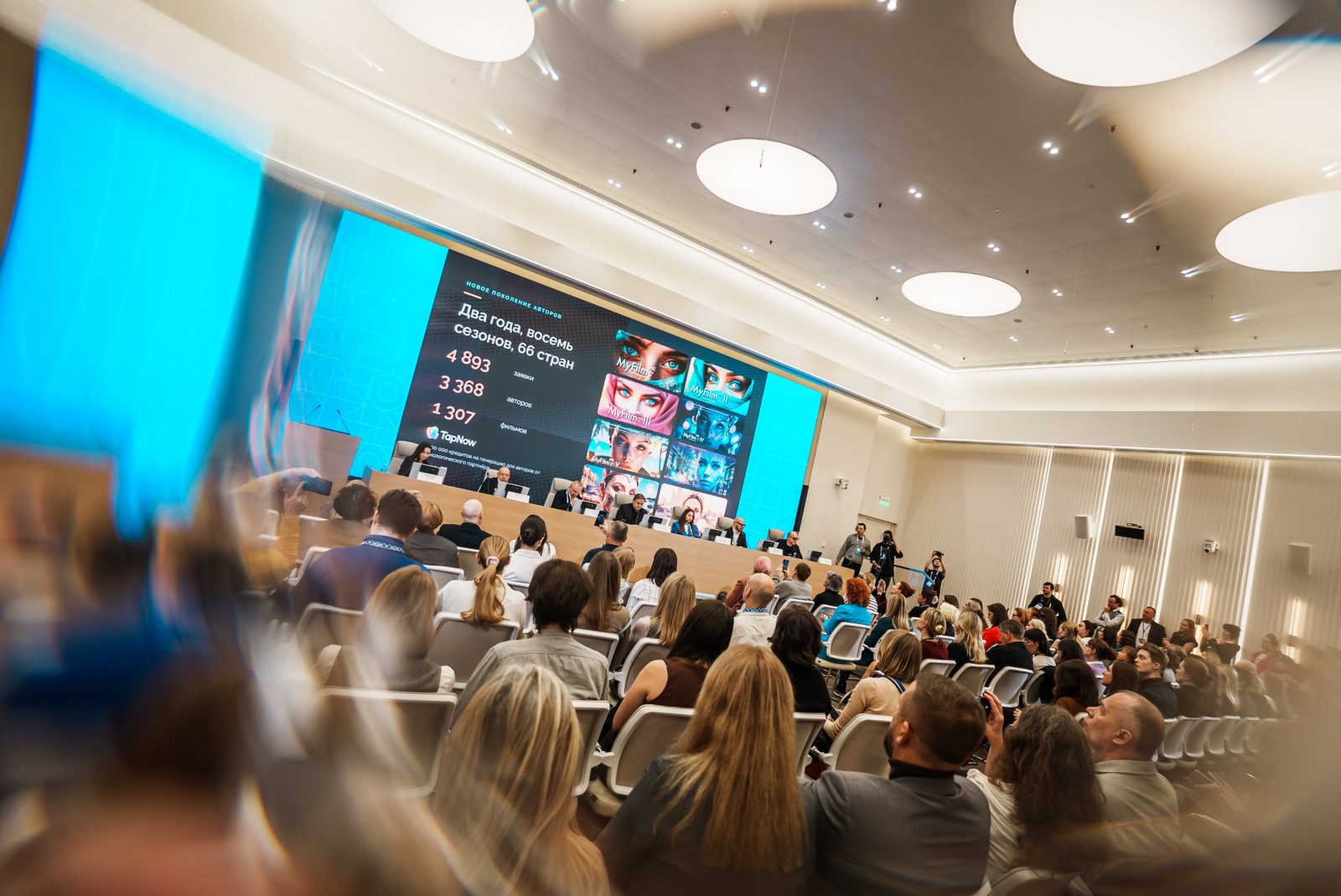
During Pavel Peregudov's talk, the hall was shown the teaser of MyFilm48's VIII season, “Moscow 2050”. This season hosted the world's first creative competition between autonomous AI systems. Peregudov then explained how authors are selected. In two and a half years MyFilm48 has run eight seasons. The competition has received almost 5,000 applications from more than 60 countries and about 1,300 works.
An autonomous system receives a creative brief and shoots a short film on it by itself. MyFilm48 winners have twice won a trip to the Cannes Film Market. “This is the shortest path from an idea to working on a big film project that has ever existed,” Peregudov said.
Projects come off the shelf
Asked by Sergey Burunov what changes when a scene can be tested before big money is spent, Peregudov replied: “Projects that two or three years ago were shelved because of their high cost are now being taken out and seriously considered for production. I am sure that in the coming years we will see quite a few films that came to life only thanks to these technologies.” In his view, the answer lies in combined approaches: the weak spots of neural-network imagery are covered by the performances of live actors.
The value of the author
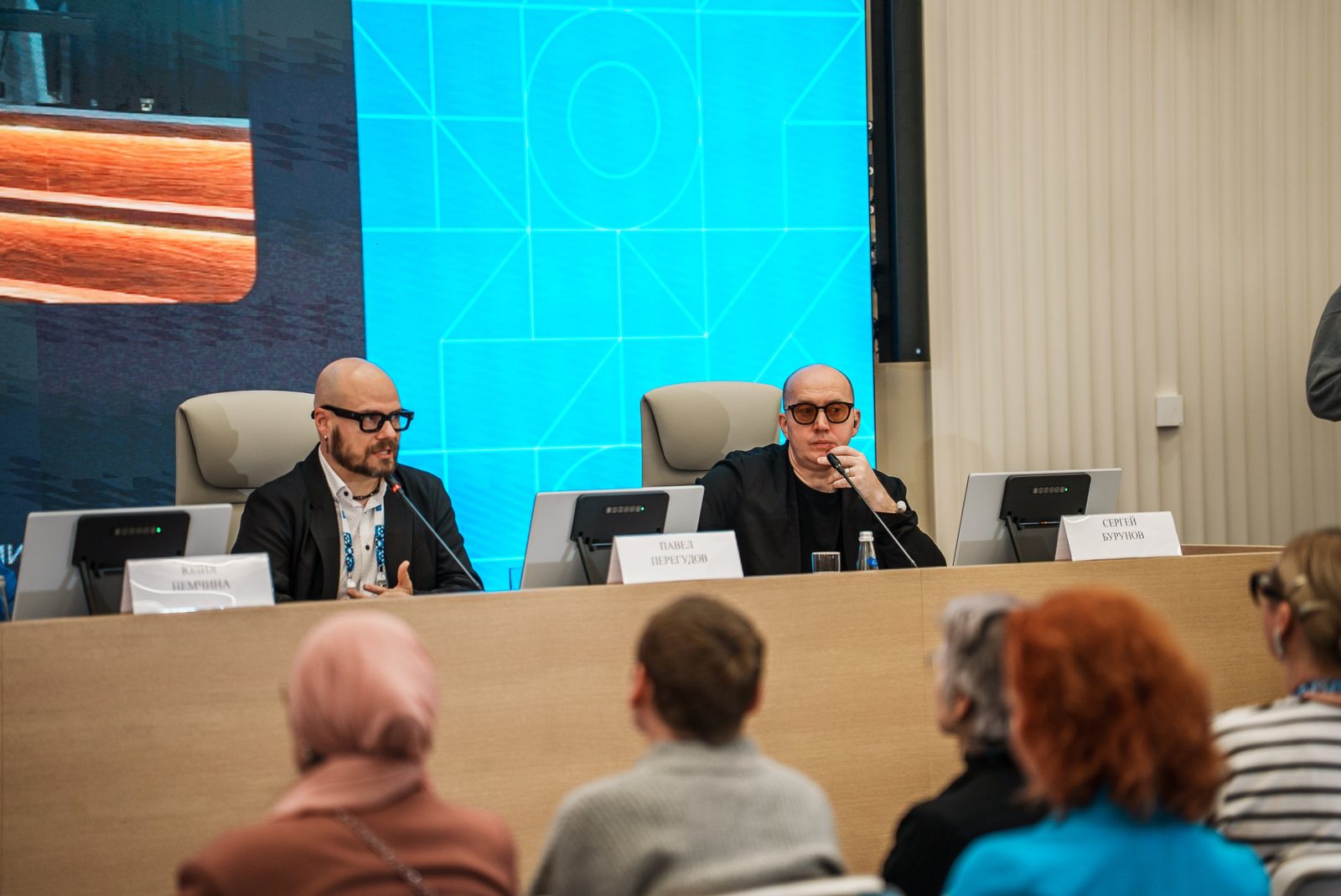
“A tool in the hands of a talented person who knows how to set up a shot and build the dramaturgy within a scene takes the work to another level,” Peregudov said. “The viewer forgets what the work was made with and immerses themselves in the hero's experience. The top places at MyFilm48 go to works with an interesting story, staged in the classical way. Nobody has abolished dramaturgy and directing, only the tool is changing.”
On animation, he said that technologies are worth using for new characters rather than for copying established ones. An actor's performance can already be filmed even on a phone and transferred to a neural-network character, but it is still born through the director's guidance and the actor's own experience.
“Let's get ready”
Peregudov observed that every stage of AI development comes with the words “it will never be able to”. A year ago people said that about mathematics, and today AI solves problems mathematicians have struggled with for decades. “Let's prepare ourselves psychologically for the day when we cry because artificial intelligence plays a scene very convincingly.”
In the final quick-fire round, asked about the main condition for a project's success, he answered: “All of it together. But without technology today you can drop out of the race very quickly.”
What the other speakers said
Artyom Mikhalkov said that hybrid shooting is no longer an experiment. The main stunt scene of the film “I Am a Ghost” is shot in three parts: on location, on LED screens and separately in a studio. According to him, the efficiency of this approach depends on disciplined preparation. For “Little Muck”, on the contrary, the team chose about 80% analogue shooting with a minimum of graphics. Using “Umka” as an example, Mikhalkov described another industry problem: a shortage of CG supervisors who can work on equal terms with the director, the art director and the cinematographer. “The creators are the ones who set tasks for artificial intelligence. They are the main ones.”
Yulia Nemchina said that at Riki, AI helps with references, locations and concept art. This matters when an animated feature takes three to three and a half years to make. Finalising the image and supervision stay with people. Open neural networks cannot handle Finnick's fur and lip-sync and do not preserve the brand's DNA, so the company is building closed models on its own character library. With AI, a new character can be launched in one or two months per episode versus five or six in classic production. But it still needs a soul: a script, actors, an artist's work. Technical staff are retraining as prompt engineers. According to Nemchina, this is requalification, not layoffs.
Gavriil Gordeev believes AI should be a tool in the hands of a professional, not of anyone who considers themselves an author. Otherwise, as once happened with amateur content, the market will be flooded with a stream of generative junk. At Okko, AI already works in the writing process:
- the author of the “Magic Precinct” franchise created an AI agent himself to keep track of the characters' logic between seasons;
- the platform's own development helps producers read scripts from a production point of view, counting locations and budgets.
According to Gordeev, a separate AI department is taking shape in film production. He sees the main risk in viewer culture: if the audience stops telling great acting from generative micro-dramas, cinema will suffer.
Alexei German Jr. admitted that AI writes individual scenes no worse than an average screenwriter but falls short of a talented one. A machine cannot reproduce a unique human face. AI may help launch science-fiction projects that used to be too expensive. But the market is full of people who sell generative production without knowing how to do it. The director said that at some point he caught himself depending on AI: he stopped thinking and immersing himself in the material. In his opinion, the expanding role of AI is inevitable. However, the viewer perceives not only the hero but also the living person behind them, so purely neural-network cinema will not work on a wide scale yet.
In the final quick-fire round, the answers about the main condition for success were:
- Nemchina: the team;
- Mikhalkov: the desire of like-minded people to make the project;
- Gordeev: soul;
- German Jr.: a sense of oneself together with one's time, country and people.
Takeaways
The participants differed in how fast they expect change, but agreed on the main point. Generative technologies are already part of production: they speed up preparation, make tests cheaper and bring back projects that sat on the shelf for a long time. At the same time, the story, the acting, taste and responsibility for the result stay with the human.
Platforms and studios are building separate AI departments and closed models. The industry is learning to tell professionals from those who only sell promises. Demand is also growing for new specialists who combine engineering thinking with directing. MyFilm48 has been preparing and finding such authors for eight seasons.
In the press
Session recording
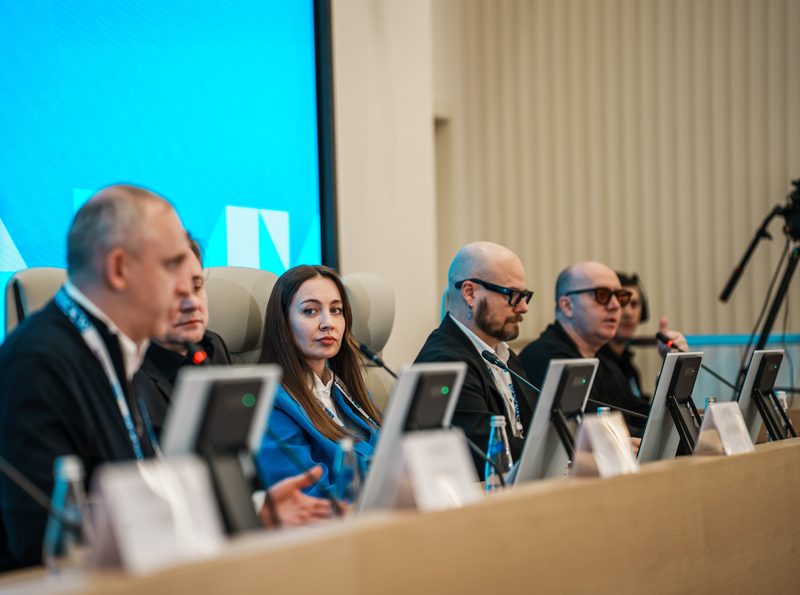
Full recording of the session (in Russian), 1 h 51 min. Watch on RUTUBE
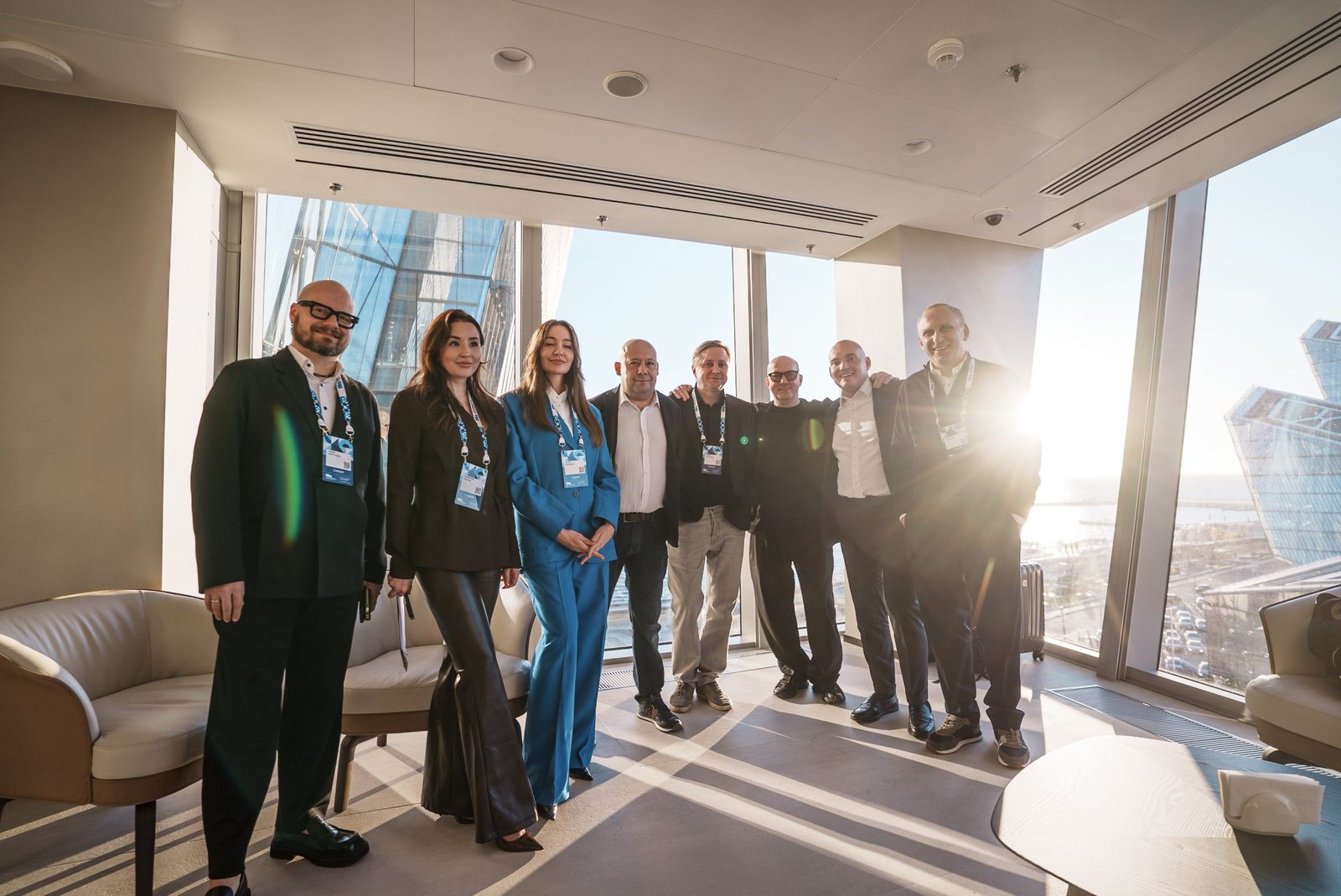
Photos from the session
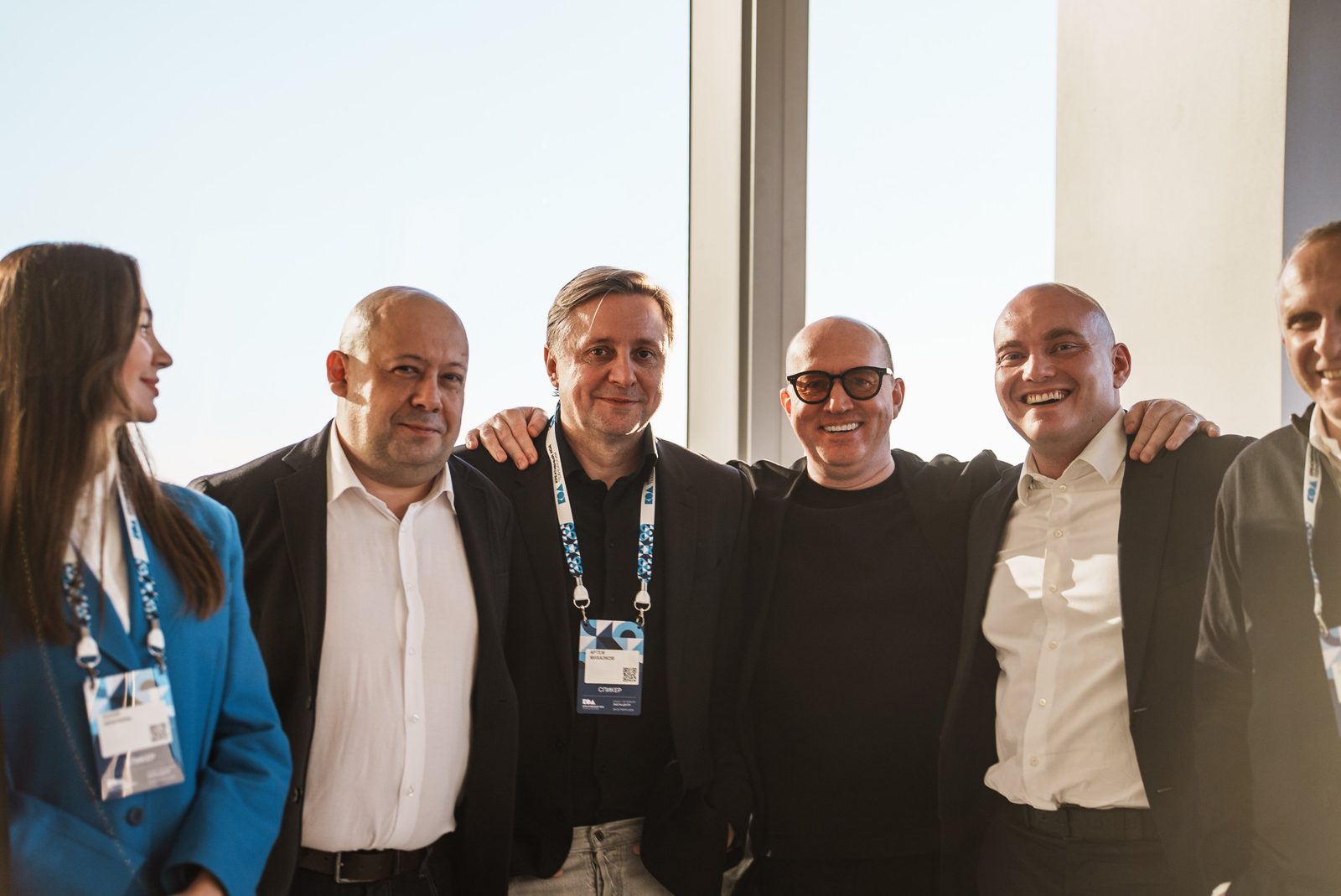
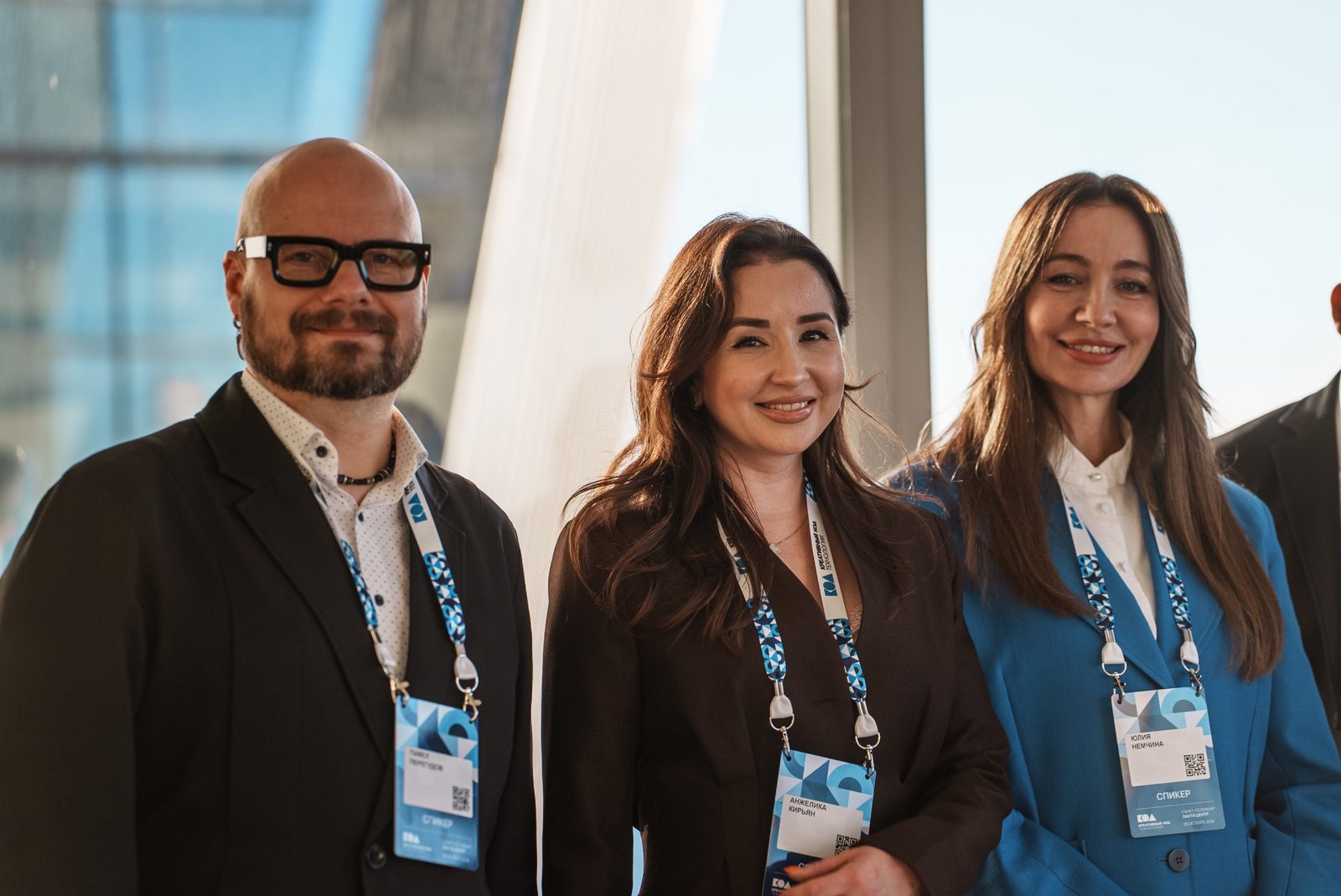
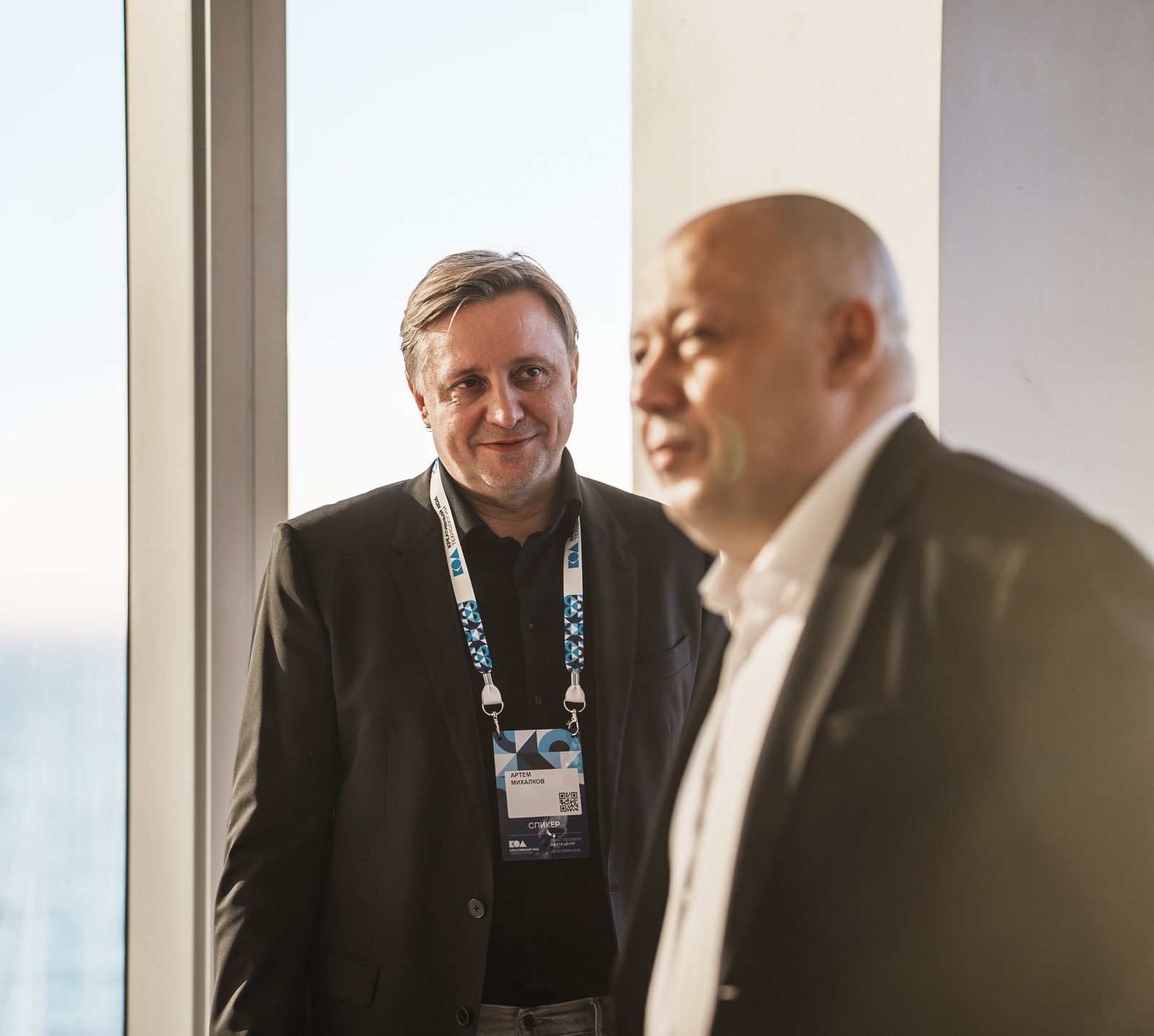
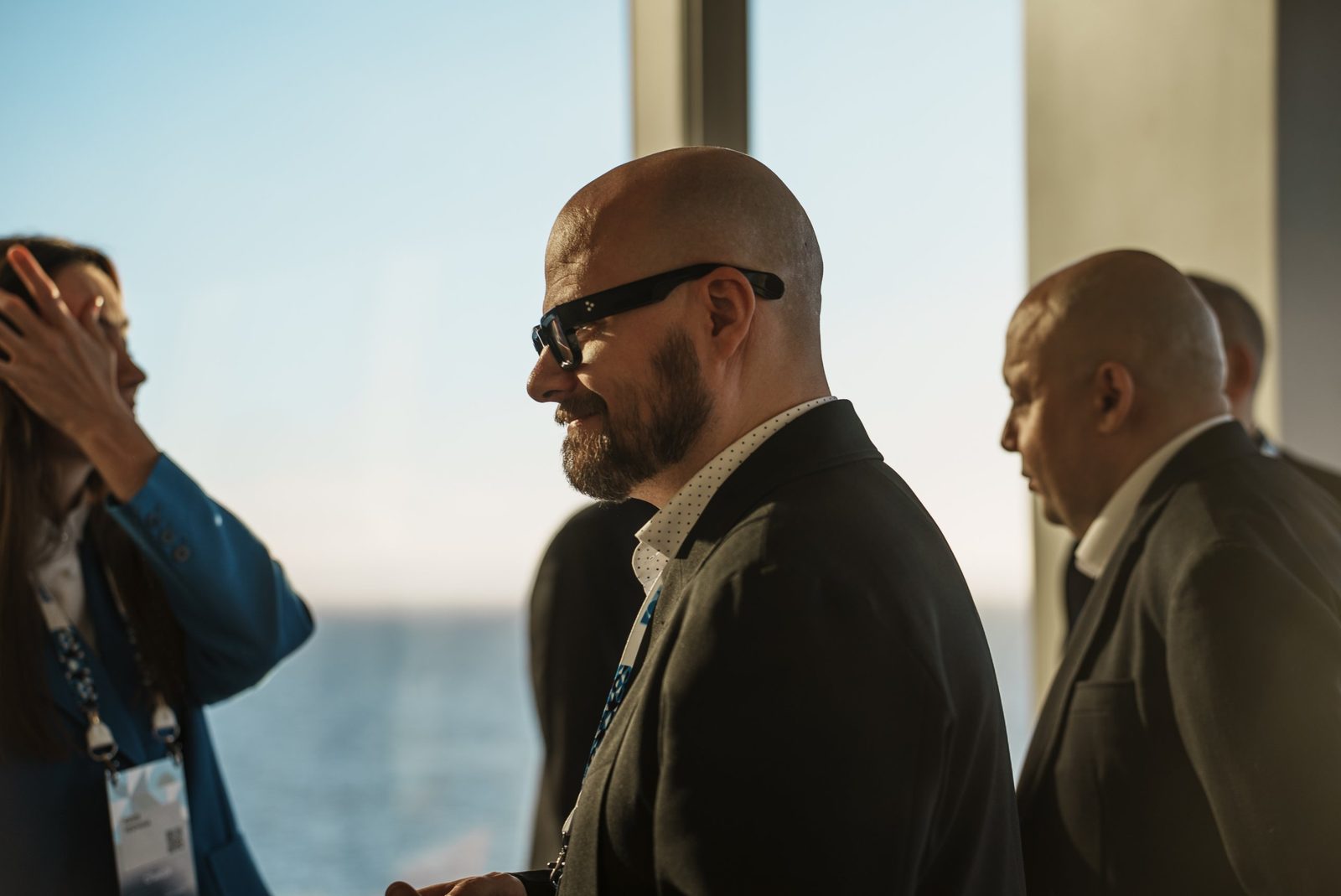
About MyFilm48MyFilm48
MyFilm48 is an international platform for generative film. It brings together talent search, verified author portfolios, B2B matching with brands and producers, and international screenings. Over eight seasons more than 3,300 authors have joined it. Award ceremonies have been held in Moscow, Bali and Cannes, as part of the AI Film Awards programme.